 Plain Lantern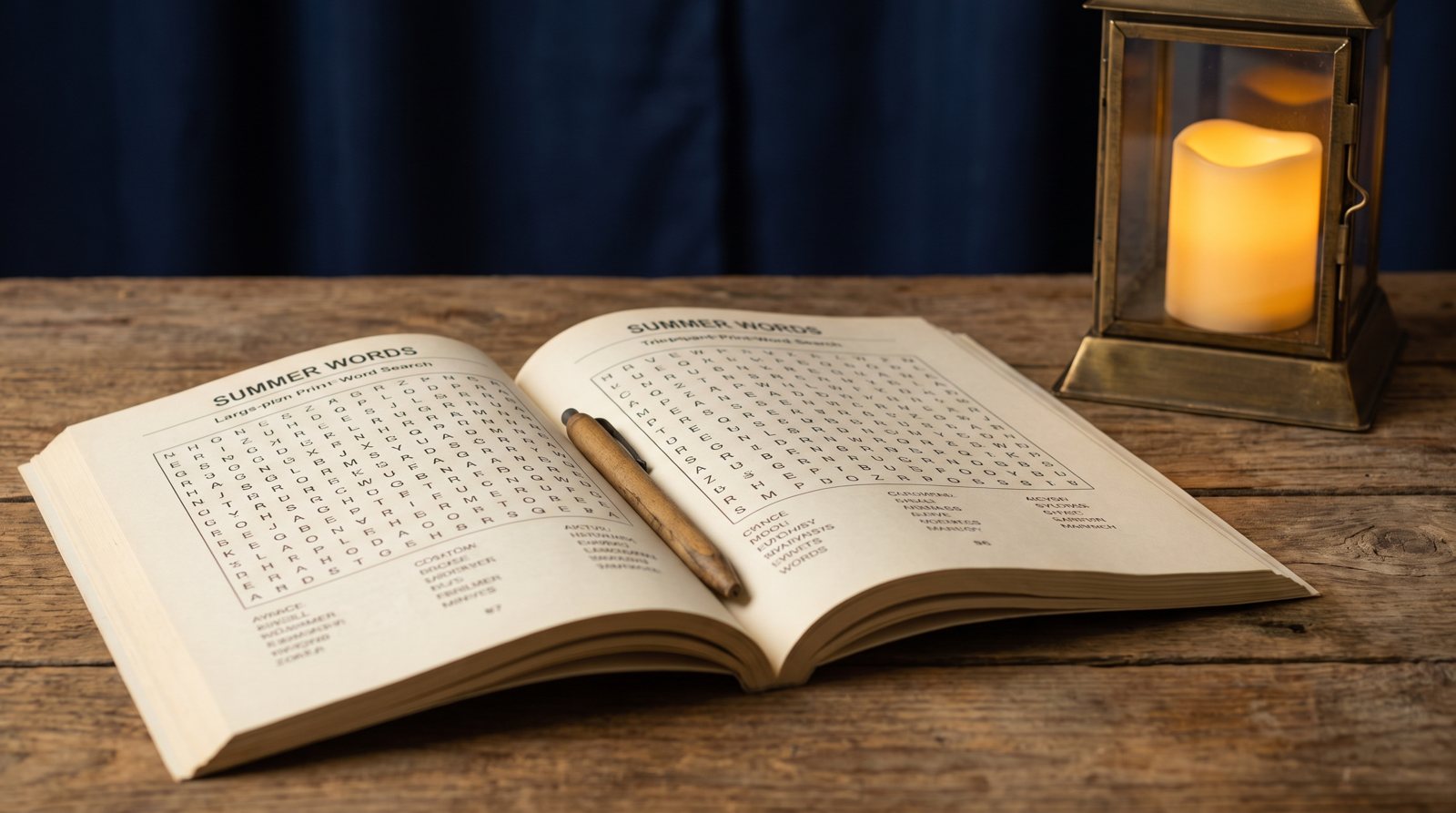
Some pastimes ask a lot of you before they give anything back. A word search is not one of them. You sit down, run your eye over the grid, and before long you have circled a word or two. No timer, no score, nobody to beat. Just the small, steady satisfaction of spotting BAKERY tucked sideways among the letters.
That easy quality is why word searches have stayed popular for so long, and why they suit so many older readers in particular. They keep the mind gently busy without the pressure that can make other puzzles feel like hard work. Here is a closer look at what a word search actually does for you, and how to get the most out of one.
What a word search asks of your brain
Finding a word in a grid is a quieter task than it looks. Your eyes scan row by row while your mind holds the target word in place and checks each run of letters against it. You are using attention, visual searching, and word recognition all at once, in a low-key way that never feels like effort.
It is worth being honest here. No puzzle is a cure for anything, and a word search will not turn back the clock on your memory. What it offers is a pleasant reason to stay mentally engaged, and staying mentally active is something many doctors and memory specialists encourage as people get older. The Alzheimer's Association lists keeping the mind stimulated among the everyday habits worth building, alongside staying social and keeping active. A word search is one small, enjoyable way to do that.
Why they suit older readers so well
Crosswords can be wonderful, but they lean heavily on trivia and general knowledge, and a run of clues you cannot answer is more irritating than relaxing. A word search works the other way round. The words are printed right there in a list. The challenge is in the finding, not in dredging up some fact you may never have known in the first place.
That makes them forgiving company. You can do a few minutes over morning coffee and come back to the same page after lunch. There is no losing your thread, no penalty for a slow day. For someone settling into a quieter pace, or a reader whose concentration comes and goes, that gentleness counts for a lot.
The comfort of large print
A word search is only relaxing if you can actually read the grid. Small, cramped letters set you squinting, and the pleasure drains away fast. This is where large-print puzzle books earn their keep. Bigger letters, more room between them, and clean lines make the whole page easier on the eyes, so you can settle in for longer without strain.
If tired eyes have been keeping you from puzzles you used to enjoy, a large-print edition often brings them back within reach. We went into this more in our note on reading with failing eyesight, and the same thinking runs through our puzzle titles.
Making it a small daily habit
A word search rewards a light, regular touch more than a marathon sitting. A few things that help:
- Keep a book and a pen where you already sit, so a puzzle is easy to pick up in a spare few minutes.
- Do one over a cup of tea instead of saving them all for a long stretch. Little and often keeps it a treat rather than a task.
- Work a grid with someone else now and then. Passing the book back and forth turns a quiet activity into a shared one, which does more good than the puzzle alone.
- Pick themes you actually like. A page full of garden words or old film stars is far more inviting than a random list.
There is no right amount. Some people do one a day, others a handful on a rainy afternoon. What matters is that it stays something you look forward to.
A quiet pleasure that happens to be good for you
Word searches sit in a nice spot. Simple enough to relax with, just involved enough to hold your attention. You get the calm of a screen-free hobby and a little mental workout at the same time, and neither one feels like a chore.
If you would like to try one set in clear, comfortable print, you are welcome to browse the Plain Lantern library. A good word search book keeps well by the armchair, ready whenever you fancy a few quiet minutes.